
How to Choose a Safe and Licensed Bitcoin Casino in Canada in 2026: A Complete Player’s Guide
How to Choose a Safe and Licensed Bitcoin Casino in Canada in 2026: A Complete Player's Guide
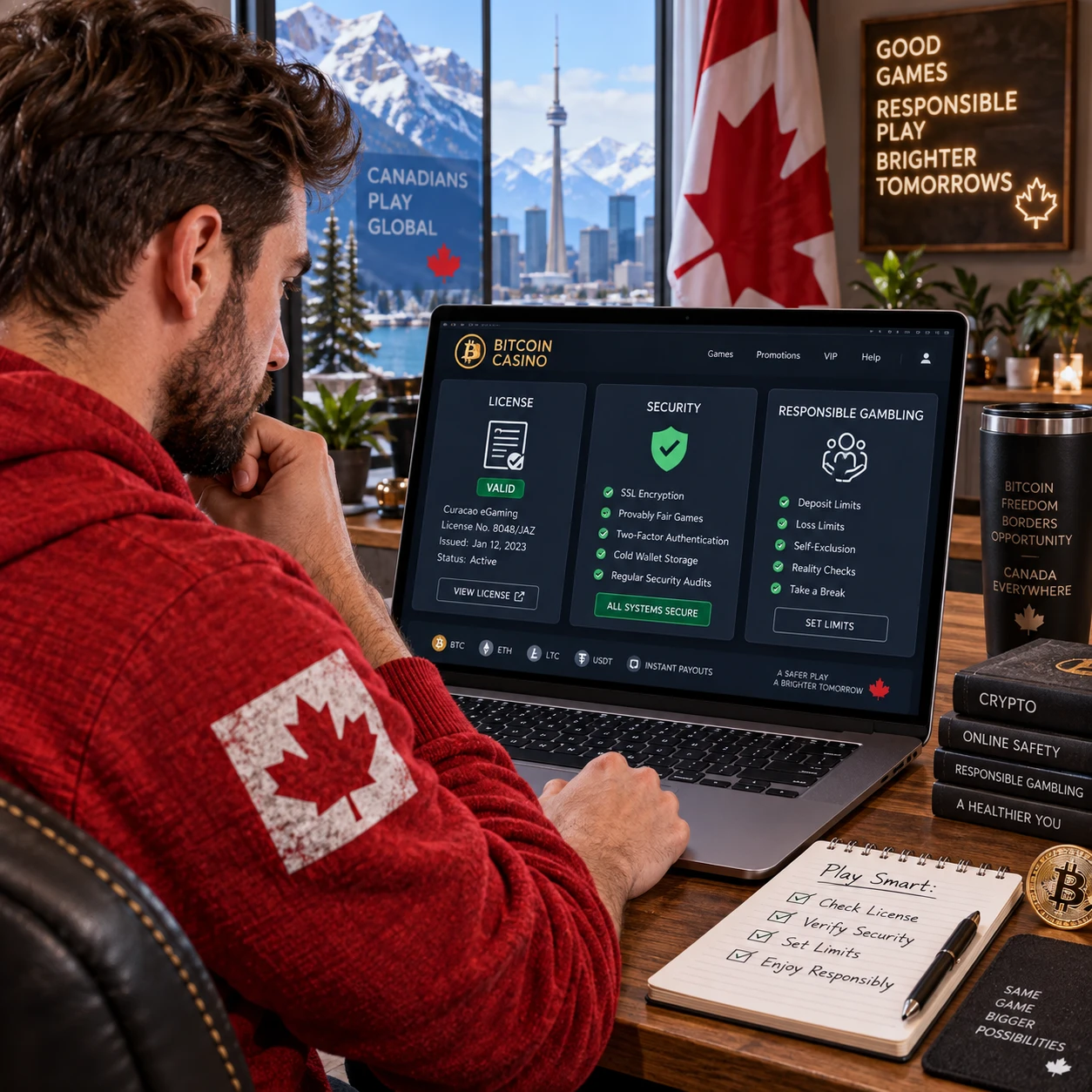
Bitcoin makes deposits and withdrawals feel fast. But fast isn't the same as safe, and I've learned that the hard way more than once. In 2026, before I put a single satoshi into any Canadian-facing casino, I check licensing, security, fairness, and whether there's a real responsible gambling setup behind the marketing. My rule hasn't changed: verify claims myself, actually read the terms, and never risk money I can't afford to lose.
What Makes a Bitcoin Casino 'Safe' in Canada?
A safer casino tells you who's running it, which regulator is watching, how your account and payment data get protected, and how you can check that the games aren't rigged. It also lays out clear withdrawal rules and gives you tools to manage your own play. No badge, no shiny security logo on the footer guarantees anything good — the details still need to hold up when you actually dig into them.
Licensing matters because it builds an accountability framework, though what that framework actually protects can shift depending on the jurisdiction. Encryption keeps your info safe in transit; independent testing and verifiable results give you something real to point to when you're judging fairness. And you should be able to find support and dispute options before you ever sign up, not after something's already gone wrong.
The Rise of Crypto Gambling in the Canadian Market
Some players pick Bitcoin for the speed, the convenience, maybe to skip a few payment-processing hoops. Fair enough. Crypto also comes with its own fee structure and privacy angle compared to card or bank payments. Here's the catch, though: blockchain transactions are generally irreversible, and crypto prices move fast — sometimes uncomfortably fast. A quick deposit tells you nothing about withdrawal speed. And using crypto doesn't excuse anyone from following local laws or the platform's own rules.
Understanding Licensing and Regulation for Crypto Casinos
Canada doesn't run one tidy national licensing system. Provinces and territories set their own rules, and Ontario operates a regulated iGaming market with specific requirements for operators who want in. So check the current rules where you live, and whether the operator you're eyeing is even authorized to serve your province.
Plenty of offshore casinos wave around licenses from the Malta Gaming Authority, the Kahnawake Gaming Commission, or Curaçao's framework. These aren't interchangeable — not even close. A license issued outside Canada doesn't automatically mean the operator can legally serve every Canadian province, and it definitely doesn't guarantee the same protections you'd get from a locally regulated site. Verify the license straight through the regulator's own records. Confirm the company name and website actually match what's on file.
Red Flags of Unlicensed or Rogue Platforms
- Unverifiable licensing: The site displays a logo or license number, but the regulator's records do not confirm it.
- Hidden ownership: The operator's legal company name, address, or contact details are missing or inconsistent.
- Vague terms: Bonus, withdrawal, identity-check, or account-closure rules are unclear or easy to change without notice.
- Pressure to deposit: Promises of guaranteed winnings, urgent offers, or requests to send crypto to a personal wallet deserve caution.
- No meaningful support: Customer service cannot explain the license, payment process, or complaint procedure.
Evaluating Security Features Before You Deposit
Start simple: look for HTTPS, use a password you haven't recycled from three other accounts, and turn on two-factor authentication. That extra step catches a lot of trouble before it starts. But none of this proves the casino itself is legit, or that your funds are actually stored safely once they're in there.
Ask directly how the operator handles player balances and crypto custody. If someone claims funds sit in cold storage, that needs real, credible backup — not just a line in the marketing copy. I'd also check whether the casino runs independent game testing and actually publishes rules, RTP info, and withdrawal conditions you can read without a law degree.
One more thing, and it matters: before you send any crypto, triple-check the deposit network and the address. Send funds over the wrong network, or to the wrong address, and that money's gone. Permanently. Start small, only once you've decided the operator checks out, and confirm you can actually withdraw under the stated rules before going any further.
How to Verify Provably Fair Gaming
'Provably fair' sounds reassuring, but the label alone proves nothing. These tools let you verify certain outcomes using cryptographic data — the exact method differs by casino and even by game, so read the actual explanation rather than trusting the badge.
- Find the game's provably fair explanation and identify what information it provides, such as a server seed hash, client seed, and nonce.
- Before a round, note or set the client seed if the game allows it. The server seed may be hidden until it is revealed later.
- After the round or seed rotation, compare the revealed server seed with its earlier hash and use the casino's verifier or an independently documented tool.
- Check that the calculated result matches the recorded outcome and that the nonce or round number is correct.
This process can confirm an outcome was generated consistently with the published method. That's it, though — it doesn't prove every game is fair, that the casino will actually pay out, or that the odds favor you in any way.
Responsible Gambling Practices and Support Resources
Set a spending limit before you play. Treat gambling like paid entertainment, not a side income, and resist the urge to chase losses with bigger bets — that's usually how a bad night turns into a bad month. Keep gambling money separate from rent, groceries, the stuff that actually matters. If you're finding it hard to stop, hiding your play from people close to you, borrowing to keep going, or feeling genuine distress over losses, that's the signal to step back and reach out for support.
When I'm researching a bitcoin casino canada option, I check the site's terms and safety claims myself — a linked page is a starting point, not a substitute for verifying through a regulator or talking to a professional. For gambling-related concerns, provincial and territorial support services are there for a reason, or reach out to a qualified counsellor. If you're in immediate danger, contact emergency services right away.
Tools Reputable Casinos Offer for Safer Play
Look for deposit limits you can set before you even start playing, time reminders, cool-off periods, and self-exclusion options. Check how fast those limits actually kick in, and whether you can reverse them on a whim (you usually shouldn't be able to, and that's a good sign, not a bad one). Some Canadian jurisdictions run self-exclusion programs — check the scope, and whether it even applies to the platform you're using. A casino's built-in tools help, but they work best paired with your own limits and outside support when you need it.
Step-by-Step Checklist for Choosing a Safe Bitcoin Casino
- Confirm the operator's legal name and verify its license with the issuing regulator.
- Check whether it may accept players in your province or territory in 2026.
- Review HTTPS, two-factor authentication, privacy practices, and account-security options.
- Look for understandable game rules, independent testing, or verifiable provably fair procedures.
- Read deposit, withdrawal, identity-verification, and dispute terms before depositing.
- Compare payout timelines and all conversion, network, and transaction fees.
- Check how Canadian-dollar values are displayed and how crypto-to-CAD conversion is calculated.
- Contact customer support with a specific question and assess whether the answer is clear.
- Locate deposit limits, cool-off periods, and self-exclusion controls before creating an account.
Common Mistakes Canadian Players Make When Choosing a Platform
The most common mistake I see? Treating a license logo as proof, without ever checking the regulator's actual records. A close second is grabbing a bonus before reading the wagering requirements, game restrictions, expiry date, and withdrawal limits attached to it. A huge advertised match sounds great until you realize how much play it demands before you can touch a cent of it.
Crypto volatility and transaction fees get overlooked too, along with the assumption that a successful deposit somehow guarantees a smooth withdrawal later. It doesn't. Read the terms, keep records of what you agreed to, and never put in more than you're genuinely okay losing. If a platform's conditions read like a riddle and support can't clear things up, that's your answer — go somewhere else.
Final Thoughts: Playing Smart in 2026
Picking a Bitcoin casino in Canada takes more than lining up bonus percentages side by side. Verify the licensing and your local eligibility, check the security and game-verification claims hold up, understand the payment and withdrawal rules, and actually use the responsible gambling tools on offer. In 2026, a slow, cautious look before you deposit beats any promotion pressuring you to act fast — every single time. And if gambling stops feeling manageable at any point, pause, and reach out for support.